
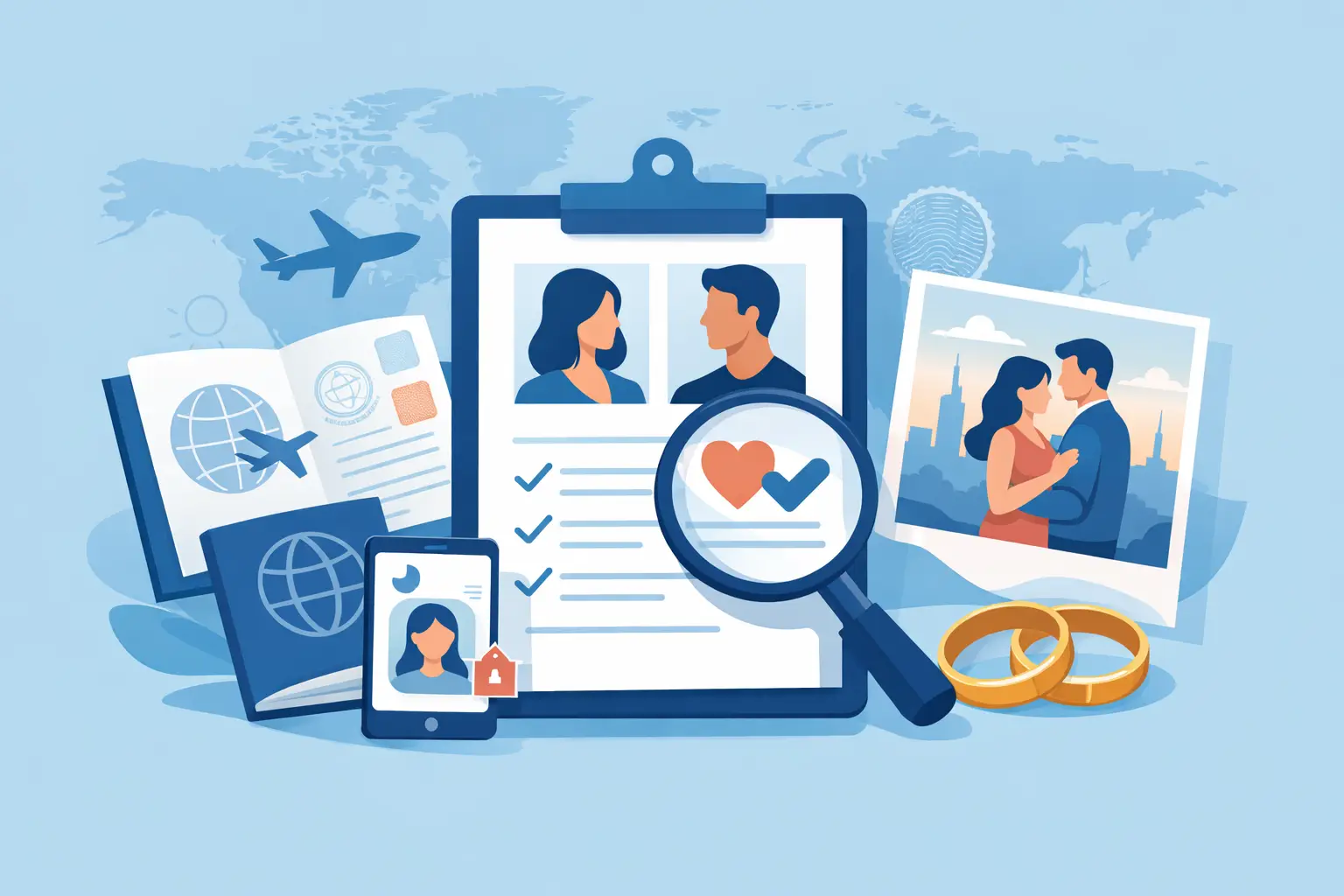
A spouse visa application is not simply a formality because you are married or in a civil partnership. The Home Office must be satisfied that your relationship is genuine and continuing, and that you meet the other requirements of the relevant family route. The best evidence for spouse visa applications tells a clear, consistent story of a real shared life, supported by documents that are reliable, dated and easy to follow.
For many couples, gathering evidence becomes stressful because their relationship does not look exactly like somebody else’s. You may have lived apart due to work, immigration restrictions or caring responsibilities. You may not have joint bills because one partner recently arrived in the UK. These circumstances do not automatically prevent a successful application, but they must be properly explained and supported.
What the Home Office is looking for
The central issue is whether the relationship is genuine and subsisting. A marriage certificate or civil partnership certificate proves that the legal ceremony took place. It does not, by itself, prove that the couple have a continuing relationship or intend to live together permanently in the UK.
Caseworkers will commonly consider whether your evidence shows regular contact, emotional commitment, practical interdependence and plans for a shared future. They will also look for consistency across the application form, supporting statements and documents. Dates, addresses, travel history and family circumstances should all make sense together.
A strong application also addresses the other route requirements, which may include the financial requirement, adequate accommodation and English language requirement. The relationship evidence cannot compensate for a failure to meet a separate mandatory requirement. Equally, meeting the financial requirement does not remove the need to prove your relationship is genuine.
The best evidence for a spouse visa is evidence of daily life
Documents showing that you live together are often the most persuasive because they are created independently of the immigration application. Where you have shared a home, provide correspondence addressed to each of you at the same address over time. This might include bank statements, council tax letters, tenancy documents, utility bills, NHS correspondence or official letters from government bodies.
The aim is not to submit every letter you have received. A carefully selected spread of documents over the relevant period is usually more helpful than a large bundle containing repeated evidence from the same month. The documents should show continuity. If there is a gap, explain it clearly rather than hoping it will go unnoticed.
Joint financial responsibility can also be valuable. Joint bank accounts, shared savings, a tenancy in both names, insurance policies or evidence of household payments may all assist. However, couples organise their finances differently. A lack of a joint account is not fatal if you can show other credible evidence of a shared life and explain why your finances are held separately.
If you have lived apart
Many spouse visa applicants have spent periods apart, particularly where the applicant is outside the UK or has been unable to obtain a visa. In this situation, focus on evidence that shows the relationship continued during the separation.
Travel documents can be particularly useful. Boarding passes, passport stamps, hotel bookings and travel itineraries may demonstrate visits. Records of regular communication, such as selected screenshots of messages, call logs or video-call history, can support the account. Choose examples across the whole period rather than providing hundreds of pages from a single week.
Money transfer records can be relevant where one partner has supported the other, but they should be accompanied by an explanation. A payment record alone does not establish the nature of a relationship. Set it in context through a clear statement and, where available, evidence of the purpose of the transfer.
Build a timeline before selecting documents
The strongest spouse visa bundles are organised around a simple timeline. Start with when and how you met, then record key stages such as first meetings, engagement or marriage, addresses where you lived, periods apart, visits, the birth of children and plans to settle together. This exercise often identifies missing dates or documents before the application is submitted.
Your personal statements should then explain the timeline in straightforward language. Each partner should give their own account, without copying the other word for word. Explain how the relationship developed, how you keep in contact, your current living arrangements and your plans in the UK. If there are unusual features, deal with them directly.
For example, if you married shortly after meeting, explain the circumstances rather than leaving the caseworker to speculate. If one of you remained abroad for a long period after the marriage, explain the practical reason and provide documents that support it. Honesty and coherence matter more than trying to present an idealised version of family life.
Evidence that often carries less weight
Photographs can be helpful, especially where they show you together over time with friends and family, at a wedding or during visits. They are supporting material, not usually the foundation of the application. Include a modest, representative selection with dates, locations and brief captions where needed.
Letters from relatives, friends, religious leaders or community members may also support the application. They tend to carry less weight than independent documentary evidence because the authors may be personally invested in the outcome. If you use them, the letters should identify the writer, explain how they know you both and give specific facts rather than general praise.
Social media posts and online relationship records can be included where relevant, but should be approached carefully. They may assist with context, yet they are easily selective and rarely prove a shared life on their own. Do not rely on screenshots alone where stronger evidence is available.
Do not overlook the financial and accommodation evidence
A spouse visa application can fail even where the relationship evidence is convincing if the financial documents do not meet the detailed rules. The applicable evidence depends on how the requirement is being met: employment, self-employment, savings, pension income or a combination. Payslips, bank statements, employer letters and tax documents must cover the correct periods and match each other.
Accommodation evidence should show that you have a suitable place to live without relying on public funds. A tenancy agreement, mortgage statement, property inspection report or a letter from the owner may be needed, depending on your arrangements. If you are living with relatives, provide clear evidence of permission to live there and who occupies the property.
These documents should be treated as a separate part of the bundle. Mixing financial evidence, personal messages and photographs without a clear structure makes a case harder to assess and increases the risk that important material is missed.
Present your documents in a way that helps your case
Use clear file names and organise documents by category and date. A short document index and a concise covering representation can make a substantial difference, particularly where the relationship has involved separation, previous immigration history, children from earlier relationships or complex financial circumstances.
Check every document before submission. Names, addresses and dates should be consistent. If a document is not in English or Welsh, provide an appropriate translation. Do not alter documents, create records after the fact or submit material that you cannot explain. The consequences of inaccurate or misleading evidence can be serious.
It is also sensible to keep copies of everything submitted. If you are applying from within the UK, maintaining your lawful immigration status and submitting the correct application before your permission expires are equally important practical issues.
When tailored legal advice is worthwhile
Professional advice is especially valuable where you have limited cohabitation evidence, a history of refusals, long periods apart, a complicated financial position or concerns about suitability. The right approach is not always to provide more documents. It is to provide the right documents, with a clear explanation of how they meet the Immigration Rules and address any obvious questions.
At Immigration Rights Solicitors, our solicitor-led approach is focused on protecting your family life and presenting your case with care and commitment. A free 15-minute legal consultation can help identify the evidence that matters most in your individual circumstances.
Your relationship is personal, but the evidence should make its reality understandable to someone who has never met you. Give the Home Office a truthful, well-organised account of your life together, and seek advice early where a gap or complication needs careful handling.
Recent Comments